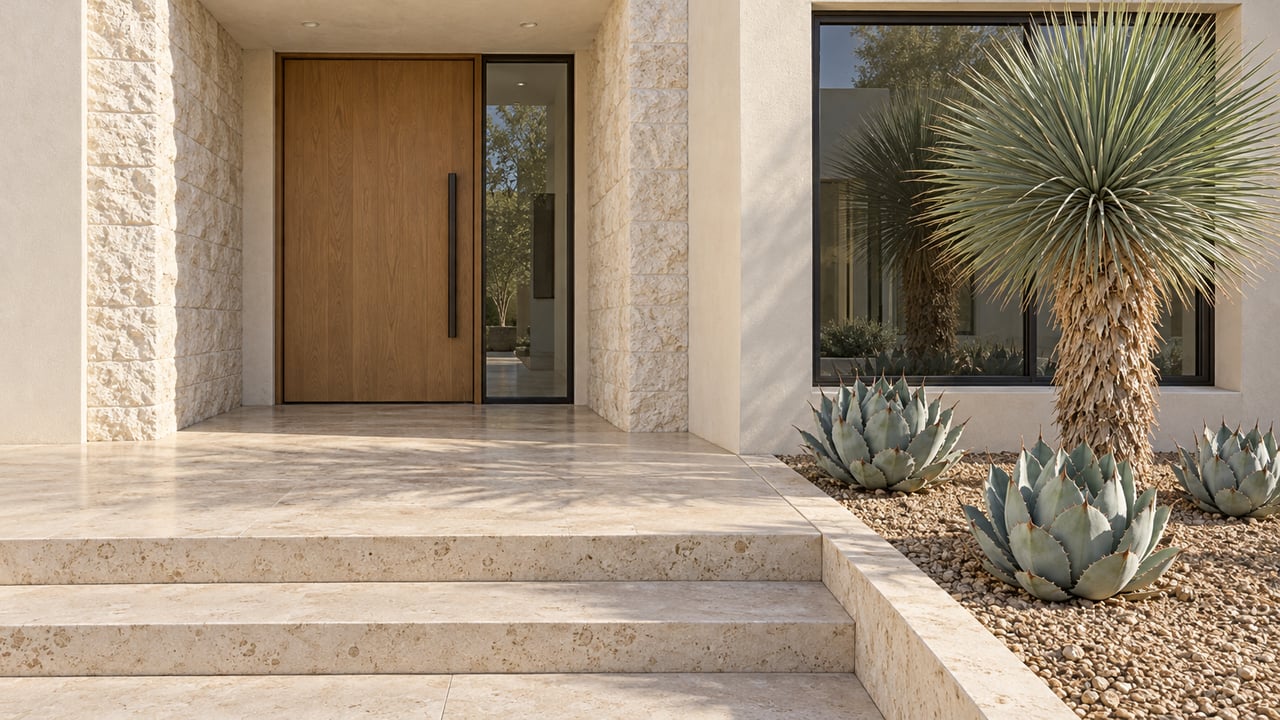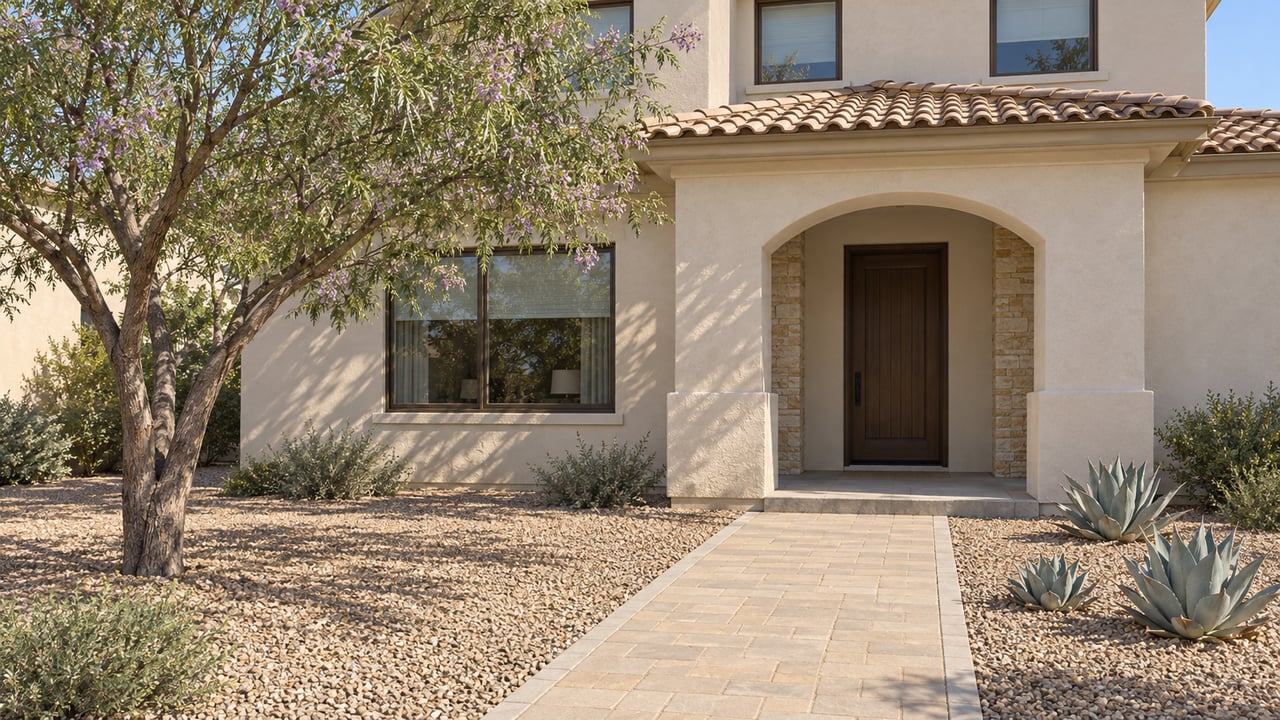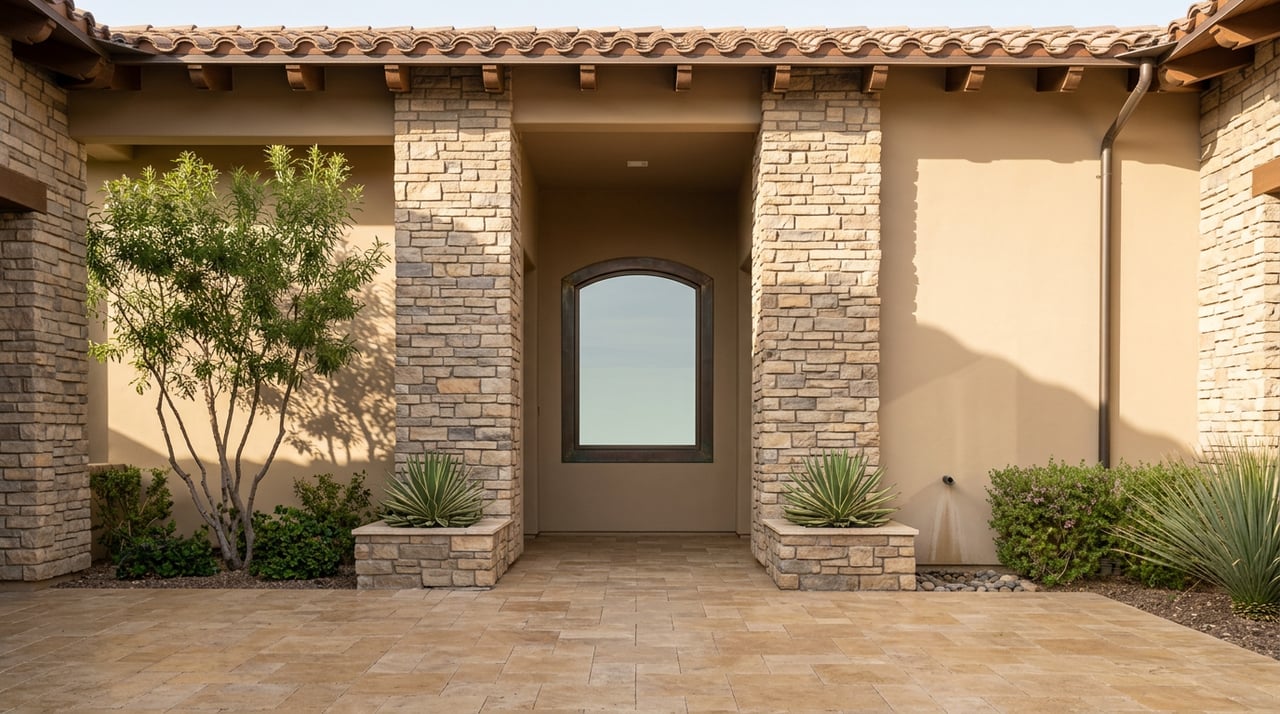
Picture two Summerlin listings pulled up side by side. One sits in a standard, non-gated pocket of Summerlin West, built in the last two years, HOA line reading $69 a month. The other sits in an older section of Summerlin South, HOA line reading $330 a month. Most buyers scanning a portal would assume the second home costs five times more to carry every month. Run the full stack on both properties and that assumption falls apart, sometimes reverses entirely.
That gap between the number on the listing and the number that actually lands on your monthly budget is the thing worth understanding before you write an offer in Summerlin, not after.
How Summerlin HOA Fees Add Up
Every property in Summerlin pays into the Summerlin Council, which funds parks, trails, and community-wide programming across the master plan. On top of that sits one of three master associations, Summerlin North, Summerlin South, or Summerlin West, depending on where the parcel falls. On top of that, most villages layer a sub-association or gated-community HOA that covers neighborhood-specific landscaping, private streets, or gatehouse staffing. Some properties carry a fourth layer: a Special Improvement District or Local Improvement District bond assessment that shows up on the Clark County property tax bill, not the HOA statement, and repays infrastructure that was built when the village went in.
Homeowners across one of the Las Vegas Valley's largest master-planned communities started paying more in HOA fees on Jan. 1, 2026, an increase that touched all three major associations, Summerlin North, South, and West, along with the Summerlin Council. The Summerlin West master assessment rose from $60 to $69 per unit, while the Summerlin Council's portion, which funds community parks, pools, events, and recreational programming, increased by $7 per month to $37 per household, already folded into the overall HOA dues residents see. Summerlin North's monthly assessment climbed from $65 to $74, tied to projected 2026 revenues and expenses of $16.1 million. Summerlin South landed at $76 per unit per month for 2026.
Here's the part that actually matters when you're comparing villages, not just reading a fee schedule:
- The Council fee is identical for every household, so it never explains a price difference between two listings.
- The master fee varies only slightly, $69 to $76 depending on which of the three associations you fall under, so it's a rounding error in most budgets.
- The sub-association fee and any active SID or LID bond are where the real spread lives, and one of those two lines is almost always missing from how buyers mentally price a home.
Why The Newest Villages Show The Lowest Sticker Price
Summerlin West carries the lowest master assessment of the three regions, and that's not a coincidence. It's the newest ground in the master plan, and newer infrastructure costs less to maintain in year one than infrastructure that's been through two decades of desert sun. In its year-end look back at 2025, Summerlin's own development team projected 11 new neighborhoods opening across 2026, and nearly all of that construction is concentrated in the western villages: Kestrel, Kestrel Commons, Stonebridge, Redpoint, Redpoint Square, Reverence, Grand Park, and the still-developing La Madre Peaks.
The Kestrel and Kestrel Commons districts saw new neighborhoods from Toll Brothers, Lennar, and other national builders in 2025, and Grand Park village welcomed neighborhoods from Taylor Morrison, Toll Brothers, KB Home, Tri Pointe Homes, Richmond American Homes, and Pulte Homes. That's a lot of fresh concrete, fresh road base, and fresh drainage infrastructure going in at once, and someone has to pay for it. Frequently, that someone is the buyer, through a bond assessment attached to the lot rather than a dues line at the HOA office.
Local fee trackers that follow live MLS data describe SID and LID assessments on new construction lots as varying by village and how much of the bond remains outstanding, with the cost riding on the property tax bill rather than appearing as an HOA charge. Older, established villages in Summerlin North and Summerlin South frequently have those bonds fully retired, which means a higher-looking sub-HOA fee in an older village can come without an active bond assessment adding to the monthly carrying cost, while a lower-looking fee in a new western village can be missing an annual line hiding in the tax bill.
What A Few Real Villages Cost, And What May Be Missing
The gated and guard-gated enclaves at the top of the market make the spread easiest to see. The Ridges, Summerlin South's flagship guard-gated community, layers a village sub-association on top of the master fee and the Council share, and the combined stack across its gated pockets runs from roughly $505 to $905 a month depending on the specific enclave. Red Rock Country Club, the guard-gated golf community that sits as the more accessible alternative to The Ridges, runs a sub-association fee in the neighborhood of $330 a month before the master and Council layers are added. Sun City Summerlin, the age-restricted 55-plus community, carries a lower ongoing sub-association fee near $230 a month, but adds a reported one-time transfer fee near $5,000 at closing, a cost structure entirely different from anywhere else in the master plan.
Compare that to a standard, non-gated Summerlin West village with no active gate and no remaining sub-association charge of consequence. A Summerlin West master assessment can be as low as $69, before adding the Council fee or any sub-association charge. But check the tax bill on that same parcel, and if it sits in Kestrel, Stonebridge, or one of the other active-construction districts, an SID assessment may add a cost that never appears anywhere on the HOA statement a buyer reviews before making an offer.
What The Blended Median Shows
The median alone does not show the full range of fees across Summerlin listings. Across active Summerlin listings on the GLVAR MLS as of July 2026, the blended median HOA fee sits around $109 a month. That single number sounds manageable. It also means almost nothing on its own, because the 25th percentile of listings sits at $69 and the 75th percentile sits at $232, with the top decile clearing $390. A median calculated across three master associations, two dozen villages, and dozens of gated sub-enclaves is a statistic built to be misread by anyone shopping a single property against it.
The spread is more useful as context than as a benchmark: if a listing's HOA fee sits near the bottom of that range, the next question isn't whether the home is a good deal. It's whether the tax bill is carrying a cost the HOA statement isn't.
The Turf Conversion That Complicates Even The Paid-Off Villages
Just when a buyer might conclude that older, SID-free villages are the safer bet on total carrying cost, a separate cost pressure is landing on those same established communities. Nevada law requires homeowners associations, along with commercial properties and multifamily residential communities, to replace decorative nonfunctional grass. Older Summerlin villages, built when broad green medians and turf-heavy common areas were standard, tend to have more of that grass than the newer western villages, which were largely designed with desert landscaping from the start. Boards that haven't already budgeted for the work are more likely to lean on a special assessment or a dues bump to get it done in time, an extra variable that has nothing to do with a village's age or its SID history and everything to do with how much grass its common areas were planted with three decades ago.
How To Actually Compare Two Summerlin Listings
Before you compare a listing's HOA line against another, ask for four things:
- The resale certificate or estoppel letter.
- The specific SID or LID payoff balance from the Clark County Assessor's parcel record, not just whether one exists.
- The date of the association's last reserve study and whether it's funded at the recommended level, since Nevada law requires associations to fund reserves adequately, and an underfunded reserve often precedes a dues increase or special assessment.
- Whether the specific village has completed its nonfunctional turf conversion or still has it scheduled.
None of those four documents show up in a portal search. All four determine what you actually pay starting the month you close.
FAQ
Do all the new Summerlin West communities carry an active SID? Not universally, but new construction districts including Kestrel, Stonebridge, and similar active-build villages are more likely to carry one than established resale villages, since SIDs typically fund the infrastructure that goes in when a village is first built and get retired over time.
Comparing HOA lines across Summerlin villages without pulling the tax record and the resale certificate is comparing incomplete numbers. If you're weighing a lower-fee new build against a higher-fee resale village and want the full carrying cost laid out before you write an offer, VICE Realty Group can pull the specific stack on any Summerlin address you're considering. Get Your Instant Home Valuation and let's talk about how a given village's full carrying costs compare with its listing's HOA fee.
This article is general information, not legal, tax or financial advice. Consult a qualified professional about your situation.