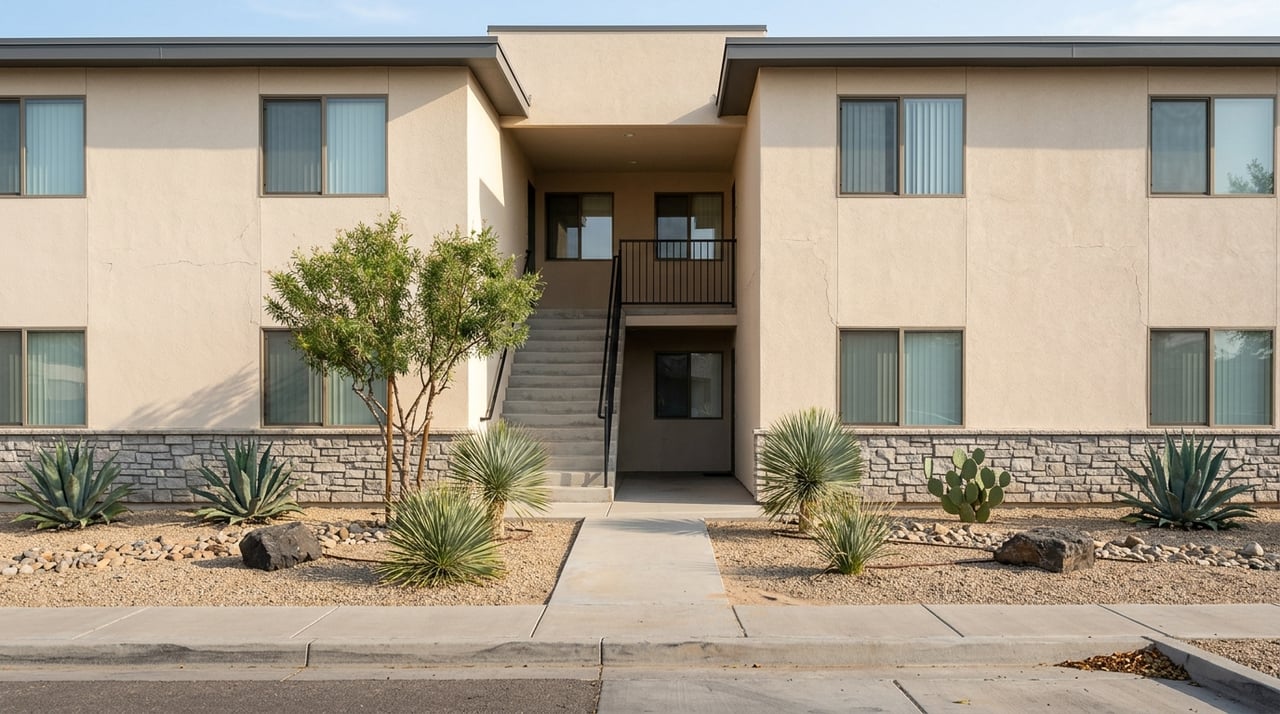
If you are thinking about buying a duplex, triplex, or fourplex in Las Vegas, the biggest risk is assuming the city behaves like one simple rental market. It does not. Rents, vacancy, building stock, and value-add potential can look very different from one submarket to the next, especially if you are comparing older infill properties with newer suburban apartment product. This guide will help you understand how to start small multifamily investing in Las Vegas with a practical, local lens. Let’s dive in.
Why small multifamily appeals in Las Vegas
Small multifamily can offer a useful middle ground between a single rental home and a larger apartment building. You may get multiple income streams from one property, more room to spread vacancy risk, and a clearer path to operational improvements through better turns, cleaner maintenance, and tighter expense control.
Las Vegas also gives you a large rental base to work with. Clark County says it serves more than 2.4 million citizens, and county tourism generated $87.7 billion in economic impact in 2024. In the City of Las Vegas, the 2020 to 2024 ACS shows a median household income of $73,877 and median gross rent of $1,563, which makes affordability and rent positioning important when you underwrite a deal.
Start with submarkets, not city averages
One of the most common mistakes first-time buyers make is using broad citywide numbers to value a fourplex. In Las Vegas, that can lead you to overestimate rent, underestimate vacancy risk, or misunderstand the kind of tenant demand a specific property can support.
Recent multifamily reporting shows why local comps matter. In Cushman & Wakefield’s Q4 2025 data, Summerlin/Spring Valley posted 8.6% vacancy with $1,612 effective rent, Henderson showed 9.8% vacancy with $1,558 effective rent, Central showed 10.6% vacancy with $1,258 effective rent, North Las Vegas/Sunrise Manor showed 12.4% vacancy with $1,393 effective rent, and the Strip showed 12.6% vacancy with $1,163 effective rent. That spread is a reminder that a small multifamily property in an older neighborhood should not be priced using suburban Class A assumptions.
Downtown Las Vegas and the Historic Westside
If you are looking for value-add potential, Downtown Las Vegas and the Historic Westside deserve a close look. The city describes Symphony Park in downtown as one of downtown’s key employment centers, with more than 600 residential units already open and more under construction. That ongoing redevelopment matters because nearby demand drivers can influence long-term leasing and renovation strategy.
Downtown also has a form-based code in mapped zones, and city examples include duplex and fourplex building forms. For a small investor, that signals a built environment where small multifamily is already part of the development pattern.
The West Las Vegas Plan adds useful context for older infill stock. It identifies apartments, duplexes, triplexes, and fourplexes in the area, with duplex, triplex, and fourplex buildings concentrated in the northwest portion of West Las Vegas and smaller apartment buildings scattered through other parts of the plan area. If you want legacy small-apartment inventory instead of newer garden-style product, this is the kind of neighborhood-level detail that matters.
Understand the market before you underwrite
Las Vegas multifamily has been working through a supply wave, and the market data suggests it is stabilizing rather than surging. Yardi Matrix reported average advertised asking rent of $1,468 in May 2026 and stabilized occupancy of 92.8% in February. Cushman & Wakefield reported $1,454 effective rent and 10.4% vacancy in Q4 2025.
You may also see different vacancy figures depending on the source. Colliers reported 5.4% vacancy in Southern Nevada in Q3 2025. These numbers are not necessarily conflicting because each report tracks a different part of the market. The bigger takeaway is that rent pressure is real, concessions matter, and net effective rent may tell you more than the advertised number on a listing.
How to estimate rents the right way
When you evaluate a small multifamily property, start with unit-level rental comps from the same submarket and a similar building vintage. A renovated fourplex in an older central neighborhood should be compared to similar small multifamily inventory nearby, not to a newer apartment community across the valley.
Use broader benchmarks only as a reality check. Current apartment-focused data in Las Vegas clusters around the mid-$1,400s, with Yardi Matrix at $1,468 average asking rent, RentCafe at $1,453 average apartment rent, and Cushman & Wakefield at $1,479 asking rent and $1,454 effective rent. By contrast, Census QuickFacts shows a citywide median gross rent of $1,563, while Zillow’s all-property-type average rent was $1,900. Those datasets measure different things, so mixing them can distort your projections.
A simple rent-check framework
Before you commit to a number, ask:
- Are your comps in the same neighborhood or submarket?
- Are they similar in age, condition, and unit count?
- Are you comparing small multifamily to small multifamily?
- Are you using effective rent if concessions are common?
- Does your projected rent make sense relative to local affordability?
If you cannot answer yes to most of those questions, your rent estimate probably needs another pass.
Don’t shortcut the expense side
Many first-time investors spend too much time chasing upside and not enough time confirming expenses. In Nevada, property tax is not a simple flat percentage pulled from a national calculator.
Nevada assesses property at 35% of current appraised taxable value, and the state tax table lists a Las Vegas city tax district rate of 3.2782 per $100 of assessed value for fiscal year 2025 to 2026. That said, the Clark County Treasurer publishes tax rates by district, so you should verify the actual parcel before building your final pro forma. A small error in taxes can materially change your cash flow on a duplex or fourplex.
Other operating costs can also move quickly if the building has deferred maintenance. Older roofs, plumbing, electrical work, exterior repairs, and recurring turn costs can erase a thin margin fast. On small multifamily, operations often matter just as much as the purchase price.
Cap rates need local context
It is tempting to ask, “What is the cap rate for Las Vegas?” but that question is usually too broad to be useful. Small multifamily deals are heavily shaped by location, renovation scope, tenant profile, and management intensity.
CBRE’s Q2 2025 survey put average core multifamily going-in cap rates at 4.75% and exit cap rates at 4.96%. Cushman & Wakefield said Las Vegas cap-rate levels were below the historical spread of 5.8%, while Colliers said sales activity picked up with cap-rate compression and higher sales comps in Q3 2025. In practice, that means you should judge a deal by rent durability, rehab costs, and your ability to operate the asset well, not by chasing one metro-wide cap rate headline.
Value-add usually means better operations
For small multifamily, value-add is often less glamorous than buyers expect. It usually comes from unit turns, rent resets, cleaning up deferred maintenance, improving common areas, and tightening expense control. In a market where rents are under pressure, clean execution can matter more than a dramatic rent-growth story.
That is especially true in Las Vegas, where delays can show up quickly if you ignore permitting. The City of Las Vegas says all new commercial, residential, and civil building plans must be submitted electronically. Routine plan reviews are about 2.5 weeks, fire reviews are about 3 weeks, and updated building codes take effect in January 2026.
Know when work may trigger review
The city’s permit definitions classify Apartment/Condo: Low/Midrise as residential occupancies with more than two dwelling units, and complete buildings receive a certificate of occupancy. For you as a buyer, the practical takeaway is simple: cosmetic improvements are one thing, but work that changes use, occupancy, or building systems may require a more formal path.
That is one reason many investors benefit from having brokerage, management, and rehab coordination aligned from the start. If your plan depends on fast turns and quick leasing, operational delays can cost more than you expected.
Management matters more than many buyers expect
A small multifamily property can look straightforward on paper, but day-to-day management affects your returns in a big way. Leasing speed, screening quality, maintenance response, documentation, and turn timelines all influence vacancy loss and tenant retention.
Nevada’s landlord-tenant process is also notice-driven. The Nevada courts handbook says a landlord must file an eviction action to remove a tenant unless the unit was surrendered or abandoned, the process begins with service of an eviction notice, summary eviction hearings are often scheduled within about a week after an answer and complaint, and security deposits must be returned or itemized within 30 days after tenancy ends. Those timelines make systems and recordkeeping especially important if you plan to scale.
For many first-time owners, this is where the right local support makes a real difference. A team that can help you buy the asset, manage it, coordinate repairs, and keep reporting organized can reduce handoff problems and help you move faster between vacancy, rehab, and lease-up.
Confirm the property jurisdiction
Before you close on any small multifamily property, confirm whether it sits within Las Vegas city limits or unincorporated Clark County. Clark County says it provides municipal services to about 1 million residents in unincorporated areas, and tax and jurisdiction rules can differ by district and parcel.
That may sound like a technical detail, but it affects how you verify taxes, permits, and local requirements. A good acquisition process should include parcel-level confirmation early, not after you are already committed.
A practical way to get started
If you are new to small multifamily in Las Vegas, keep your first purchase process simple and disciplined. Focus on a submarket you understand, verify rents with true local comps, budget conservatively for expenses, and treat operations as part of the investment thesis rather than an afterthought.
A practical starting checklist looks like this:
- Choose one or two Las Vegas submarkets to study closely
- Compare only similar duplex, triplex, and fourplex properties
- Underwrite to effective rent, not just asking rent
- Verify parcel-level taxes and jurisdiction
- Inspect carefully for deferred maintenance
- Separate cosmetic improvements from permit-sensitive work
- Have a clear management and turn plan before closing
Small multifamily can be a strong entry point in Las Vegas, but the winners are usually the buyers who stay local, stay realistic, and stay operationally disciplined.
If you want help evaluating a duplex, triplex, or fourplex in Las Vegas or anywhere in Clark County, VICE Realty can help you connect the dots between acquisition, management, and rehab so you can make a cleaner decision with fewer moving parts.
FAQs
What counts as small multifamily in Las Vegas?
- In practical terms, most buyers mean a duplex, triplex, or fourplex when they talk about small multifamily in Las Vegas.
Why do Las Vegas submarkets matter for small multifamily investing?
- Las Vegas rent and vacancy levels vary meaningfully by submarket, so using neighborhood-specific comps helps you avoid overestimating income or misreading demand.
How should you estimate rent for a Las Vegas fourplex?
- Start with unit-level comps from the same submarket and similar vintage, then compare your result to broader apartment benchmarks as a reality check.
What should you know about Las Vegas property taxes on small multifamily?
- Nevada assesses property at 35% of taxable value, but the actual tax rate can vary by district and parcel, so parcel-level verification is important.
Why is property management important for Las Vegas small multifamily owners?
- Management affects leasing, maintenance, documentation, deposit handling, and legal notices, all of which directly affect vacancy time, compliance, and cash flow.
Should you check if a property is in Las Vegas or unincorporated Clark County?
- Yes, because jurisdiction can affect municipal services, tax details, permitting, and other property-level requirements.